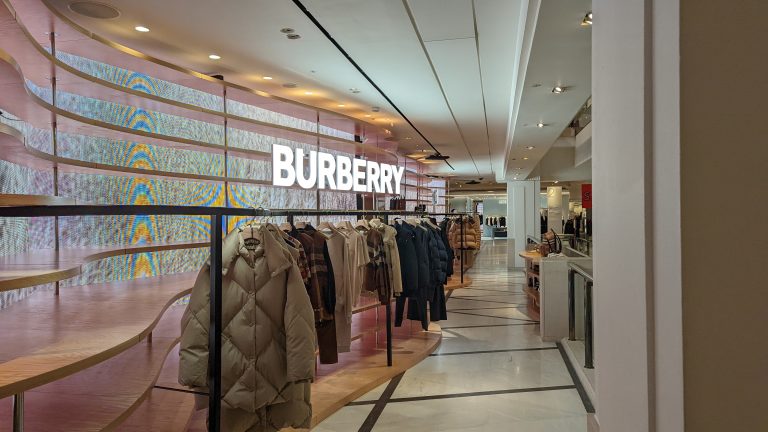
Retail is often the sector that’s heard of directional sound but hasn’t yet worked out how to specify it. Store designers know the concept exists — targeted audio at a shelf edge, a fitting room, a window display — but need the practical detail: which technology, what throw distance, how it mounts, and how it fits into a shop fit programme.
This page covers what’s needed to move from “we’ve heard of this” to a working specification.
Where directional audio is used in retail
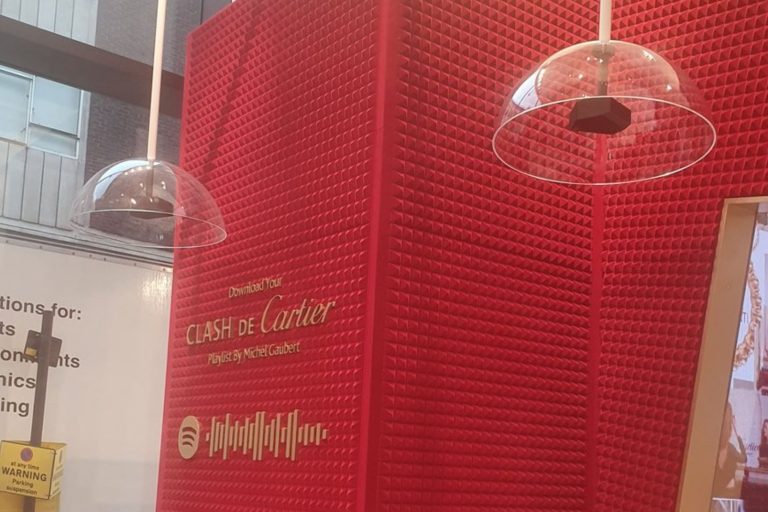
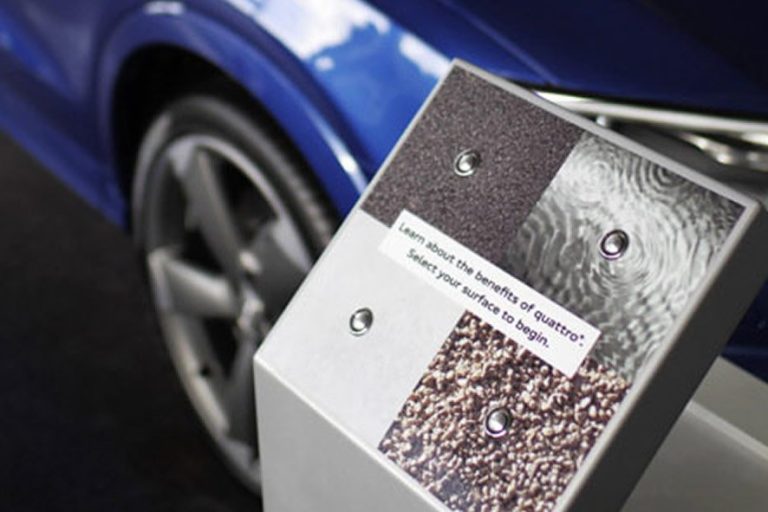
- Shelf-edge and product messaging. A customer standing in front of a specific product hears a targeted message — a promotion, a product story, a cross-sell prompt — without it broadcasting down the whole aisle.
- Window displays. Passersby outside a store can hear audio tied to a window display without it leaking into the shop floor, or vice versa.
- Fitting rooms. Personalised or promotional audio delivered to an individual fitting room without spilling into adjacent rooms.
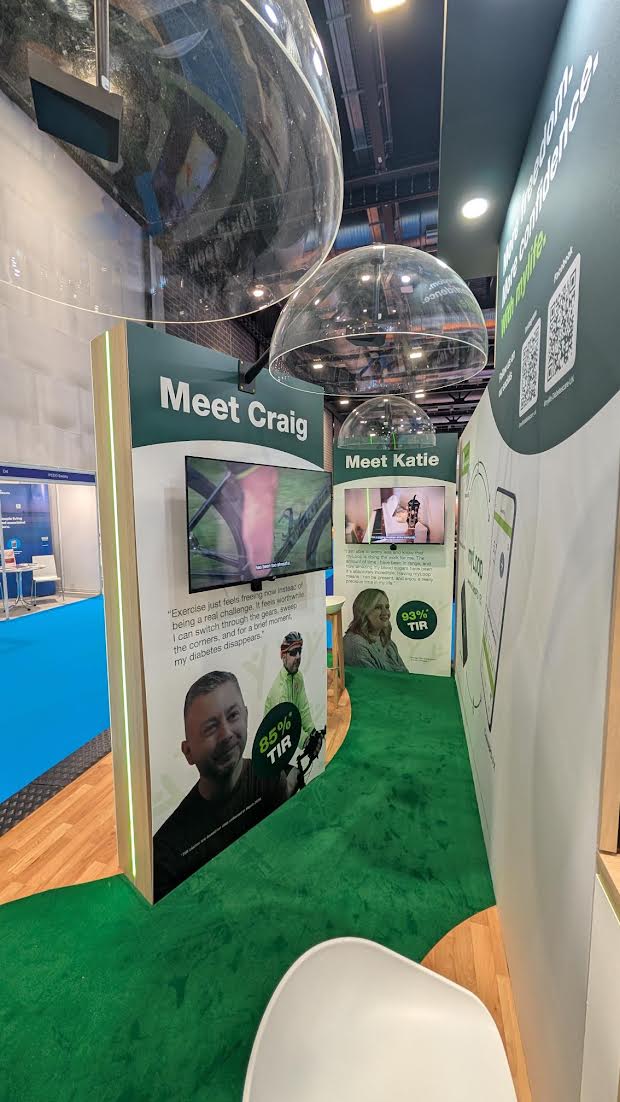
- Digital signage and kiosks. Pairing directional audio with a screen so only the shopper engaging with that display hears its sound — useful in busy stores where multiple screens would otherwise create a wall of competing audio.
- Till points and service counters. Reducing the ambient noise contribution of counter-based audio or announcements.
Choosing a technology for a shopfit
Retail specification usually comes down to throw distance, mounting constraints and store acoustics:
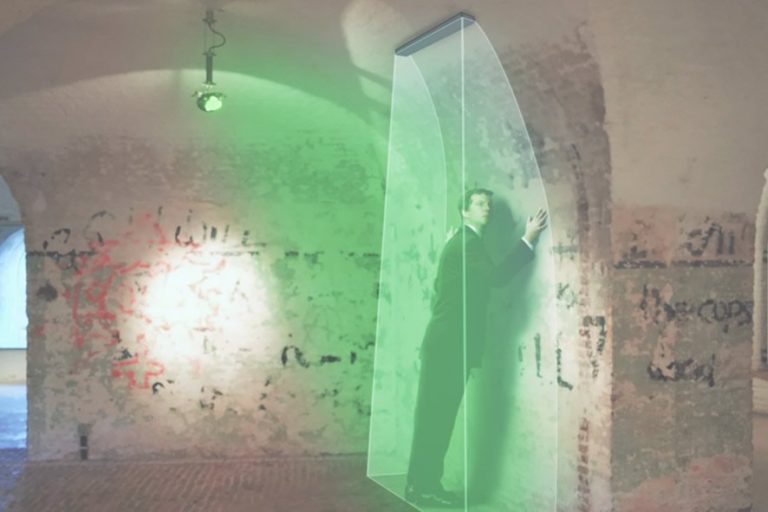
- Planar wave panels are a strong fit for shelf-edge and signage integration — their slim, flat form factor mounts flush to fixtures or display units without adding visual bulk, and tonal quality is close to a conventional speaker.
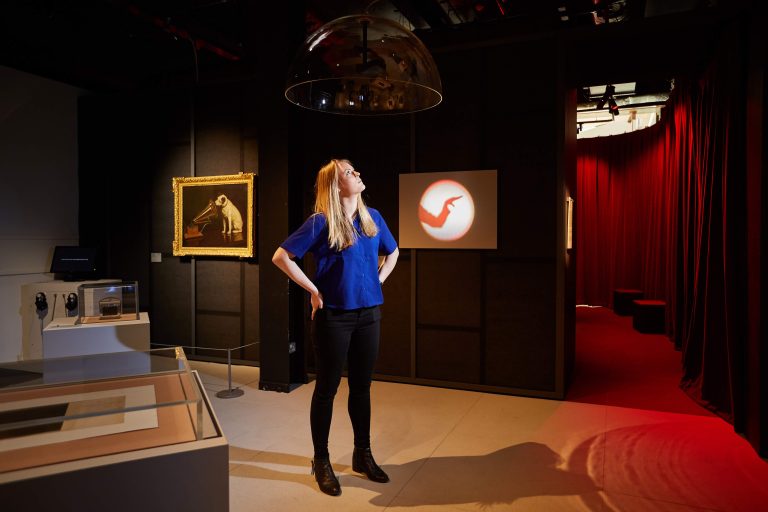
- Parametric (ultrasonic) speakers suit single-shopper zones — a very tightly defined listening area, useful for fitting rooms or a specific product-in-hand moment.
- Dome/localizer speakers suit fixed zones like a till point or a seating/waiting area within the store.
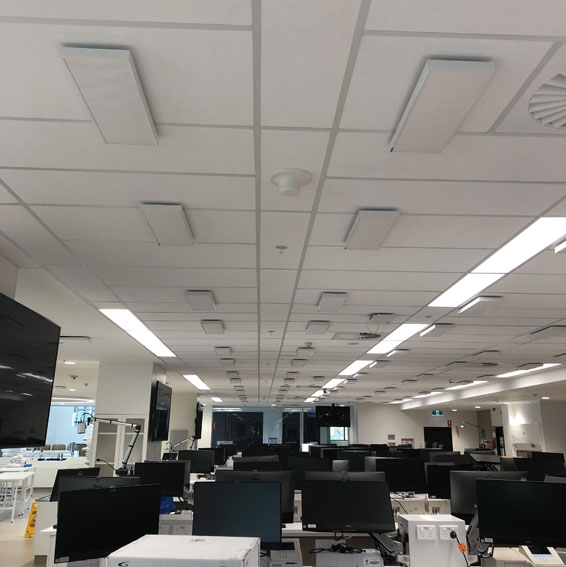
- Beamforming speakers suit wider zones such as a whole window display bay or an aisle, where a group of shoppers rather than one individual needs to be covered.
The full breakdown of throw distance, spill and mounting trade-offs for each technology is in our directional speaker technology guide.
From concept to shopfit-ready specification
Store designs typically move fast and go through several fixture revisions before final sign-off. Because we hold the largest directional speaker product range and test every unit that comes to market ourselves, we can help narrow the technology choice early and provide the specification detail (mounting dimensions, power requirements, throw distance) a shopfit contractor needs to build it in ; rather than the designer having to reverse-engineer that from a manufacturer’s generic datasheet.
For multi-store rollouts or pilot fits, our hire fleet allows a single store to be trialled with real directional audio before a chain-wide specification is locked in.
Frequently asked questions
Can directional audio be built into standard shopfit fixtures? Yes, particularly planar wave panels, which are thin enough to mount within or behind standard fixtures, signage and display units without significant redesign.
How far away does a shopper need to be for a directional message to “switch off”? This depends on the technology and the specific unit — throw distance and beam width vary considerably between parametric, planar wave and beamforming products. This is exactly the kind of detail worth testing in our demo suite rather than taking from a spec sheet.
Is this only for flagship stores, or does it work for a standard-format shop? It works for both — the difference is typically the number of zones specified rather than the technology itself. Smaller or standard-format stores often use one or two zones (e.g. one window bay, one till point) rather than the multi-zone specification a flagship might need.
Can we trial this in one store before rolling out across a chain? Yes — hiring the equipment for a pilot store is a common and low-risk way to validate the specification before committing to a chain-wide rollout.
Does directional audio work alongside our existing in-store music system? Yes, directional speakers are typically used to supplement specific zones rather than replace a store’s general background music or PA system entirely.
-
 Retail
 -
 Agency & Experiential
 -
 Exhibition
 -
 Museum
 - View all case studies
Transducer

Audio Spotlight AS-24i
SB-47 Sound Beam
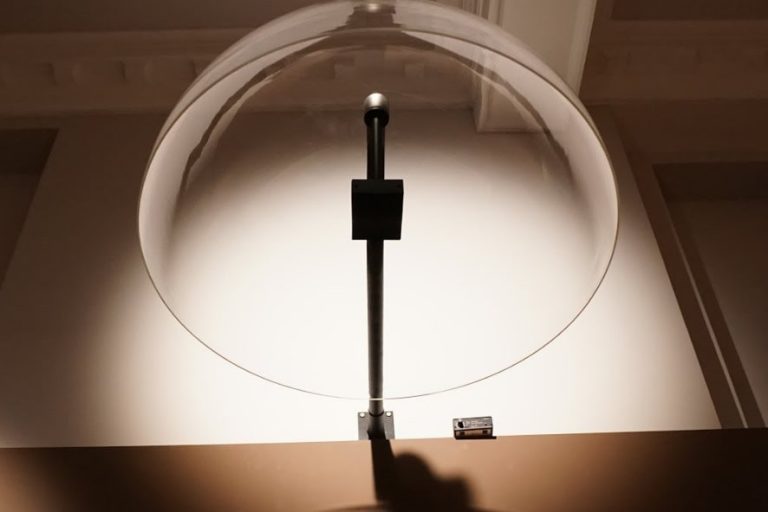
32″ Dome Speaker